BHIMA – One of the Pandava brothers, a hero of the Mahabharata War

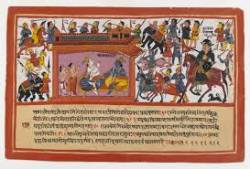
Bhima (the terrible) was the product of his mother’s union with Vayu, the wind god. (For more details see Kunti.) Bhima had a terrible temper but was coura­geous and a great warrior. He was the Pandava brother with the most strength and appetite. He would eat half of the family’s food. During the first exile from the Pandavas’ lost kingdom, Bhima saved the family from a burning house and subdued asuras (demons) to stop them from molesting humankind. After defeat­ing the demon Hidimbha, Bhima married the demon’s sister Hidimbi as … Continue reading
BHARATA – A brother of Rama

BHARATA – A brother of Rama

There were five Bharatas in Hindu mythology: (1) the brother of Rama, (2) a par­tial incarnation of Vishnu who ruled for 27,000 years and whose land was called Bharata, (3) a king of Hima who reigned for 100,000 years and, according to one tale in the Bhagavata Purana, was the king from whom India received its name, (4) a sage and writer of the Natyasastra (art of theater), and (5) a late collective term for the sons of Agni, god of fire. Bharata, son of Das’aratha and brother of Rama, … Continue reading

BHARADVAJA – A sage

BHARADVAJA – A sage

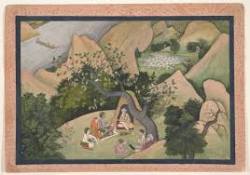
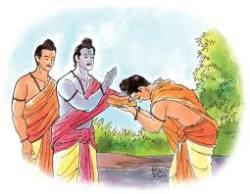
Bharadvaja was the son of Maharishi Atri. He lived thousands of years, years that he used for the study of the Vedas. He was a disciple of the great Valmiki. Many Vedic hymns are credited to Bharadvaja’s authorship. When Rama was beginning his exile, he went to Bharadvaja’s asrama and was blessed by him. Later when the great king Bharata visited with a huge ret­inue, Bharadvaja used his powers as a magician and called the architect of the gods,Visvakarman, to arrange a banquet, with dishes of food floating down from … Continue reading

BHAKTI – A religious practice of worship

Most Hindu mythologies are built upon a logic of devotion (bhakti), connecting worship (puja), purity (shuddhi; sauca), morality (dharma), responsibility (karma), and austerities (tapas). Bhakti can be more than just “being religious,” since it can lead to liberation (moksha) from life’s addictions and even from the cycle of rebirth (samsara). This sense of liberation is often connected to an after­life with a personal supreme god, such as Siva, Vishnu, or Devi. It has always involved a loving relationship with the divine. Some myths are told from the perspective of bhakti. … Continue reading

BHAIRAVI – A manifestation of Devi

BHAIRAVI – A manifestation of Devi

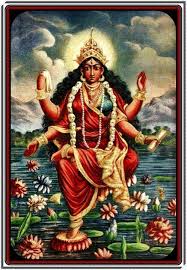
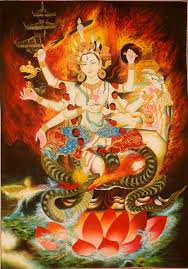
The Bhairavi is “the horrific one,” a “hot,” as scholars say, or nonorthodox, form of Devi and a counterpart of Bhairava. She was also one of a very ancient group of eight Ambas, or Matrikas (moth­ers), who were non-Vedic and identified with the feminine energies of great gods (Brahmani from Brahma, Mahesvara from Siva, and so on). The seven other Ambas were Rudrarcika, Rudracandi, Nateshvari, Mahalakshmi, Siddhaca- mundika, Siddhayoeshvari, and Rupavidya. The count increased until the Ambas, or Matrikas, were beyond number. They can also be shown as worship­ping Siva … Continue reading

BHAIRAVA – An attendant of Siva

BHAIRAVA – An attendant of Siva

Bhairava (the terrible) is a popular Tantric deity—of the type scholars like Wendy Doniger classify as hot, or nonorthodox. Once, overcome by pride, Brahma the creator insulted Siva. Out of the fire of Siva’s anger Bhairava was born. Instantly Bhairava rushed at Brahma and pinched off the fifth, or crowning, head of Brahma. Siva turned Bhairava into the damanaka, or tatiri tree. But Siva was technically guilty of taking the life of a brahmin (brahmahatya) by cutting off one of Brahma’s heads. So in expiation of that sin, he—some say … Continue reading

BHAGIRATHA – An ascetic king

BHAGIRATHA  – An ascetic king

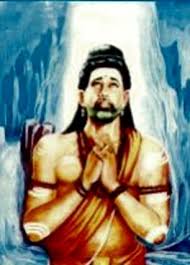
Bhagiratha’s story is part of the myth of the coming to earth of the Ganga (Ganges). These interlocking stories gave Bhagiratha a great royal lineage, with prior events in that lineage requiring him to do a thousand years of austerities (tapas) in order to ask Siva for a boon. And all this explained the coming down to earth of the Ganga. Bhagiratha’s great-grandfather, Sagara, had two wives and sons from each. All 60,000 sons of one wife were killed by the sage Kapila as they disturbed his rituals. Indra had … Continue reading

BHAGAVATI – The goddess

BHAGAVATI – The goddess

Bhagavati (feminine form of “lord”) is another name for Devi, or Shakti; when it elevated the goddess to the role of the Supreme, it became a term used by her sect, the Saktas. In the Devi Bhagavata Purana the mother of the universe, Devi, taught Vishnu about the eternal reality of time, space, and the universe (brah- manda). The name Bhagavati could be interchangeable with Prakriti (nature), indicating the eternal and all-powerful. The Saktas taught that everything is grounded in the energy (sakti) of the mother and by her all … Continue reading

BHAGAVATA PURANA – A scripture

BHAGAVATA PURANA – A scripture

The Bhagavata Purana is a highly devotional scripture that articulated the views of tenth-century South India and of those worshippers of Krishna known as the Bhagavatas. It is quite large, even by Indian standards, containing 18,000 verses (slokas), in twelve books (skandhas) of 332 chapters. All the incarnations of Vishnu are described, but the tenth skandha is a masterpiece on the divine Krishna. The Bhagavata Purana should be given as a gift on the full moon day of Proshthapada (September), along with an image of a golden-colored lion.

BHAGAVAD GITA, BHAGAVADGITA – A scripture

BHAGAVAD GITA, BHAGAVADGITA – A scripture

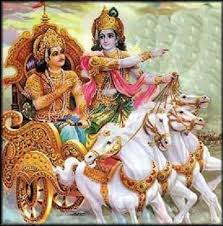
The Bhagavad Gita (Song of the Lord) is one of the most loved scriptures of India. It is pan-Indian, even though its central character, Arjuna, discovered that the driver of his war chariot, Krishna, was the supreme lord of the universe, Lord Vishnu. If this claim were taken literally and exclusively, the Bhagavad Gita would be limited to devotees of Vishnu (Vaishnavites, or Vaishnavas). But many interpreted Krishna’s revelation of the Godhead metaphysically: he was, accord­ing to them, speaking of the vastness of the divine and Vishnu as only one … Continue reading