BUDDHA – A negative incarnation (avatara) of Vishnu

BUDDHA – A negative incarnation (avatara) of Vishnu
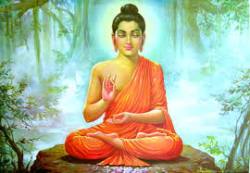
In some accounts one of the ten incarnations of Vishnu was as the Buddha. Vishnu came to earth in order to delude those who already deserved punishment for their bad deeds (karma). Deceived by the Buddha’s false teachings, these indi­viduals renounced the Vedas and ceased to do their duty (dharma). They were then punished in hell or by inferior births. In a number of later texts, this Buddha avatara was given a positive purpose. Vishnu was said to have chosen the incarnation as the Buddha in order to teach nonviolence … Continue reading
BRIHASPATI – A sage

BRIHASPATI – A sage

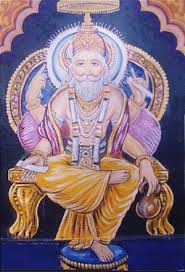
Brihaspati was the teacher of the devas (gods). He was born of Angiras and Vasudha (or SSraddha). Angiras was the son of Brahma, the creator, who had lost his seed in the sacrificial fire at the sight of a celestial maiden. Sage Brihaspati was also identified with a celestial star or planet, Jupiter. In the Rigveda there was a god of this name (also known as Brahmanaspati). The sage Brihaspati was married to Tara, who was unusually beautiful. Con­sequently Tara was abducted by Soma (or Candra, the moon), and that … Continue reading

BRAHMIN (ALSO BRAHMANA AND BRAHMAN) – One of the four castes

The Rigveda described the origin of the four castes from parts of the cosmic per­son, Virat Purusha. The Manu-smriti (the law code of Manu) said that the four castes where born from different parts of the body of Brahma. Brahmanas (brah­mins) were born from the face, ksatriyas from the arms, vaisyas from the thighs, and sudras from the feet of Brahma. The place one found in this hierarchy of privilege ordained by birth was founded on the actions one had done in previous lifetimes, that is, on one’s karma. The … Continue reading

BRAHMANDA – A cosmogonic principle in the Rigveda

BRAHMANDA – A cosmogonic principle in the Rigveda

Brahmanda, or the egg of Brahma (immensity), may have been the subject of an entire book describing a creation myth, the Brahmanda Purana. But it is no longer extant, existing only in fragments of other works. The description of the origin of the universe as a golden egg appeared in both Vedic and Puranic literature. In the beginning there was nothing but the golden egg in space alone. From it was born the Cosmic Person (virat purusha), whose different body parts became the different planets and the four castes (varnas).

BRAHMANAS – A division of the Vedas; a collection of scriptures

The Vedas came to be divided into the Rigveda (hymns), Brahmanas (commen­taries), Aranyakas (forest texts), and Upanishads (a treasury of mystical and devotional texts). The Satapatha-brahmana was considered to be the oldest Brahmana. It was a great source of mantras, or incantations. The mythological point of view changed between the period of the Rigveda and that of the Brahmanas. The Brahmanas were concerned with ritual and its effectiveness. There was a triad of gods who were most important: Agni, Indra, and Surya. Agni’s role had increased, and the symbolism of … Continue reading

BRAHMAN – An early term; the Absolute

The word brahman is more context-sensitive than most Sanskrit terms. It is neuter in gender and evolved into one of the most important concepts in Hindu theology and philosophy. For one school of Hinduism Brahman came to mean the Absolute as impersonal and formless—and should be capitalized in English. It could not be described in terms of anything lesser—even the most well-mean­ing personifications and projections that worshippers might attribute to the divine. In the earliest sections of the Vedas, however, brahman was used to mean the magic power behind the … Continue reading

BRAHMACARI, BRAHMACARYA – The stage of life (asrama) of student

This is the first of the four asramas, or stages of life. The other three are house­holder (grihastha), forest dweller (vanaprastha), and renunciate (samnyasa). A brahmacari was one who stayed in the household of the teacher (guru, or acarya) and learned scriptures, rituals, and ascetic practices. It was a period of chastity, ended by dying a symbolic death involving a bath in a river and being reborn to marry and enter the duties of a householder.

BRAHMA – A deva (god)

BRAHMA – A deva (god)

Brahma rose to importance in the late Vedic period of the Aranyakas and Upan- ishads, after the first Hindu triad declined—that of Surya, Indra, and Agni. Brahma’s temple at Pushkara was the beginning point for pilgrimages from the time of the two great epics. However, it turned out to be the only temple dedi­cated to Brahma as the primary deity that has survived the centuries. His cult may have once been important enough to command the respect of pilgrims, but he was badly used in most of the later myths. … Continue reading

BHUMI -The goddess of earth

Bhumi (the earth) was a Puranic addition to the Hindu pantheon. There are a number of versions of her birth, and her children had so many different gods and demons as fathers that another myth had to provide a curse from Parvati to explain this flaw in her character. Some of the versions of Bhumi’s birth in the Puranas involved a physicalearth that then became a goddess. But in others she is the daughter of Brahma. In one version of the first kind, during the period of floods, the earth … Continue reading

BHRIGU – A sage, son of Brahma

BHRIGU – A sage, son of Brahma

There are many versions of Bhrigu’s birth. Depending on the account, Bhrigu was born as one of the maharishis or as a demon (asura). One account said that he was the son of Brahma, born of Agni at a sacrifice (Brahma-yajna) presided over by Varuna as the chief priest (hotri). In yet another Bhrigu was born from Brahma’s skin. And still another account said that he was born of Manu and then sired the greatest of sages and rishis, the class of Bhargavas, called the Bhrigu- vams’a (Bhrigu’s family). Nevertheless, … Continue reading