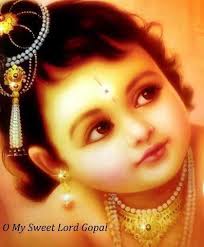
BHAGA – A deva

Bhaga (inherited share) was a Vedic deity of wealth, power, and happiness. He was also, according to the Rigveda, one of the seven adityas. The other six are Mitra (friendship, comradeship), Aryaman (honor, or chivalry), Varuna (binder to tribal rules; “all-seeing”), Daksha (ritual skill, or rules of ritual), and Amsa (gods’ share). Later, in the Mahabharata and the Puranas, there are twelve adityas, born to grandfather Kasyapa-prajapati and his wife Aditi. Bhaga was given a wife, Siddhi (psychic power). He made brief appearances: in Indra’s assembly, at Arjuna’s birthday celebration, … Continue reading
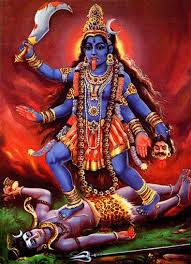
BHADRAKALI – An incarnation of Parvati

BHADRAKALI – An incarnation of Parvati

When SSiva learned of his wife Sati’s self-immolation in the sacrificial fire of her father Daksha, he loosened his matted hair in full anger. Out of this angry energy were born two attendants: Virabhadra and Bhadrakali. Bhadrakali was the angry energy of Parvati in a feminine form. Siva sent them to kill Daksha. This part of the Siva myth cycle involves the killing of a brahmin. Even Siva could not do that directly. Devotees of Lord Vishnu used this myth to argue that SSiva was not invited to Daksha’s Vedic … Continue reading

BHADRAKA – A sinful brahmin

Bhadraka had lead such an immoral life that some accounts say that he was out- casted. But one day he took a ritual bath for three days at Prayaga, during the month of Magha (a month in the Hindu calendar that falls in February or March). It had been said that those who took a bath at Prayaga in the month of Magha would be absolved of all their sins. So Bhadraka was awarded rebirth in heaven after his death because of this single act. This type of myth advertised … Continue reading

BALI – A great monkey king

Bali’s myth is nested within a number of interlocking myths. His part in the story of Rama and Sita is mostly negative, as Rama has to kill him. But this is because he has turned from the very practices that made him a great king. He had a divine birth, one of miracle and magic. And that birth was set in motion by a woman sage of great power whose pronouncement stopped the sun from ris­ing. Bali was the son of Indra by Aruna, but Aruna was a male—the charioteer … Continue reading

BALI – A king of the asuras

Bali was present at so many times and places that the mythmakers had to employ one of their greatest discoveries, the various periods of the Manus (man- vantaras), a repeating of the cosmic ages each with its own “first man” (Manu). Thus the stories of Bali and his deva (god) opponents were never in conflict. Mahabali (or “great” Bali) was present at the Churning of the Ocean in the Cakshusa-manvantara, the period ruled by the Manu Cakshusa. He fought Indra and the gods, constantly defeating them with the magic of … Continue reading

bala-rama, balarama, balabhadra-rama – Elder brother of Krishna and an avatara of Vishnu

bala-rama, balarama, balabhadra-rama – Elder brother of Krishna and an avatara of Vishnu

This myth is nested within the great myth cycles of Lord Vishnu and Shri Krishna. Bala-Rama was involved in many episodes as an adoring, supportive older brother of Krishna. It was a role deserving of a divine lineage, demonstrat­ing the kind of person who deserved to be near so great an incarnation as Krishna, and how important it is to live one’s own dharma (duty). Bala-Rama’s birth was particularly miraculous. On the day of the marriage of the Yadava king Vasudeva to Devaki, a voice was heard from the sky … Continue reading

BALA – A demon (asura)

BALA – A demon (asura)

Bala lived in Atala (one of the seven hells), teaching ninety-six kinds of magic to trouble the devas (divinities). Out of one of his own yawns, he created three women with the power to entice whomever they wanted. These three women had an aphrodisiac called hataka. They gave hataka to men and enjoyed them as long as they liked—and then would abandon these poor mortals, drained of their energy. In a battle with Indra, king of the devas, Bala defeated him. Indra “took refuge in Bala” and glorified him with … Continue reading

AYODHYA – A city

Ayodhya was the capital city of the kings of Ikshvaku. But it then became one of the seven most sacred cities in India because it was the birthplace of King Rama. Ayodhya was also where Rama ruled as king after he defeated Ravana. Ramanavami is the festival that is still celebrated there, one of the five great fasts (maha-vratas) of Vaishnavism. Ayodhya has become a flash point for communal struggles in modern India since a four-century-old mosque was destroyed by radical Hindus there. They believed that it had been built … Continue reading

AVATARA -A concept meaning incarnation, or “coming down of god”

The term avatara is usually associated with divine incarnations, especially the ten incarnations of Vishnu. But there were lists with as many as twenty-six incar­nations. The ten avataras, dashavatara (dasha, “ten,” and avatara, “incarna­tions”), were Matsya the fish, Kurma the turtle, Varaha the boar, Narasimha the lion-man, Vamana the brahmacari (second stage of life) dwarf, Parasu-Rama (or Rama with the ax), Shri Rama, Balabhadra-Rama, Krishna, and the future avatara, Kalki. The incarnation of Vishnu as Kalki is expected at the end of the Kali Yuga when this evil age ends … Continue reading

AURVA – A fierce sage

The Aurva myth was told only in the Mahabharata and portrayed a time of mutual killings between the ksatriyas and brahmins. It took some of the motifs of the Agni myth cycle, such as the submarine fire, and reshaped them, portray­ing the fiery priest Aurva, whose horse-headed descendants would consume the world at the end of the age. The Aurva myth may have been a model for that of the later Parasu-Rama incarnation in the Puranas. A generous king named Kritavirya made the priestly descendants of the sage Bhrigu very … Continue reading