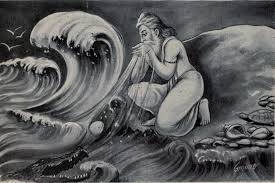
AGASTYA, – AGASTI

AGASTYA, – AGASTI

A rishi (sage) who conquered the Vindhya mountains Agasti was mentioned in a hymn in the Rigveda dedicated to Mitra, a solar deity. That hymn said that two of the adityas, Mitra (comradeship) and Varuna (binder, “all-seeing”), placed their semen in a pot and set it before Urvasi, an unusually beautiful apsara (celestial maiden). Because she had aroused their desires, Mitra and Varuna cursed Urvasi to live on earth as the wife of the rishi Pururavas. Agasti (or Agastya) and Vasishtha were the sons born to her. Later versions expanded … Continue reading
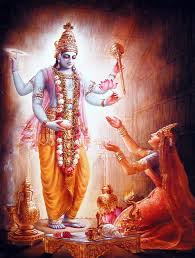
ADITI -A devi (goddess), mother of the gods

ADITI -A devi (goddess), mother of the gods

There are few interesting myths to tell about Aditi, but her status and roles change so remarkably that she illustrates the fluidity of Hindu myths. Her name literally means eternity (free, boundless, infinity), so philosophically she is a per­sonification of time. Aditi slowly evolved as the prototype of the Great Mother, Devi, or Sakti. In the early Rigveda she was described as the mother of seven (and later twelve) adityas (children of Aditi), and was prayed to for protection. There are prayers to her in this period asking her to … Continue reading

GUNANIDHI – THE BRAHMINS’ SON

GUNANIDHI – THE BRAHMINS’ SON Narada asked lord Brahma, when did lord Shiva make Kailash as his abode and what was the reason of friendship between Shivaji and Kubera. Brahma narrated the following story- – There used to live a brahmin by the name Yagyadutt in  Kampilyanagar, who was proficient in the performance of Somyagya. He had a son named Gunanidhi. Though he was a scholar but at the same time he was irreligious and kept bad company. He used to indulge in evil activities like gambling. His father – … Continue reading

Uttara Ashadha Nakshatra – 26° 40′ Sagittarius to 10° 00’ Capricorn

The twenty-first nakshatra is Uttara Ashadha, consisting of two stars in the breast of the Archer. Uttara Ashadha has one pada in Sagittarius and three in Capricorn. Ruled by the Sun, its symbol is an elephant’s tusk, reflecting Ganesha’s blessing on our activities. Another symbol is the planks of a bed, which symbolize the securing of rest and peace. Called the “universal star,” this asterism reflects deep humanitarian concern and fairness to all races. Abraham Lincoln had his natal Moon in this nakshatra. Uttara Ashadha is ruled by the Universal … Continue reading

Vishakha Nakshatra – 20° 00′ Libra to 3° 20′ Scorpio

The sixteenth lunar mansion is named Vishakha, the “star of purpose.” It resides primarily in the constellation of Libra and consists of four stars forming the scales while extending toward the sign of the Scorpion. This nakshatra is thus called “the forked” or “two branched.” Vishakha is sometimes represented by an image of a large tree with spreading branches providing protection for others. It also suggests one who slowly grows in influence and can produce great fruit as one ripens with age. It is also known as Radha, “the delightful” … Continue reading

Chitra Nakshatra – . 23° 20’Virgo to 6° 40’Libra

Chitra, the “star of opportunity,” is beautifully reflected by the fixed star, Spica. It is symbolized by a bright jewel or pearl representing the divine spirit within us. Chitra means “the brilliant,” “the bright,” or “the beautiful.” It reflects the many, variegated colors seen in the radiance of a white star. Chitra also translates as a painting or work of art suggesting “pretty pictures” or something pleasing to look at. Artistic talent and ability to arrange things creatively is observed here. Chitra people are usually attractive, charismatic and possess dynamic … Continue reading

Uttara Phalguni Nakshatra – 26° 40’Leo to 10° 00’Virgo

The twelfth nakshatra, Uttara Phalguni resides in two fixed stars at the tail of the Lion but extends into the constellation of Virgo. Called the “latter reddish one,” it is ruled by the Sun and has a strong Mercury influence in its last three padas. The first pada (3° 20′) is located in Leo, ruled by the Sun, which can bring tremendous opportunities for growdh and creative expansion. The successful movie director Oliver Stone has both his natal Sun and Mercury’ in this pada. This segment of Uttara Phalguni helps … Continue reading

Purva Phalguni Nakshatra – 13° 20′ to 26° 30′ Leo ’

The eleventh lunar mansion resides entirely within the body of Leo the Lion. Called “the former reddish one,” it consists of two stars, Leonis and Zosma, found at the rear flank of the Lion. Purva Phalguni means the “fruit of the tree.” It is also known as Pubba. It is represented by a swinging hammock representing rest and recuperation. Its deity is Bhaga, the God of good fortune and prosperity. Bhaga protects marital happiness and bestows family inheritance. Lord Shiva started on his marriage procession under this star. The Shiva … Continue reading

Ashlcsha Nakshatra – 16° 40′ to 30° 00′ Cancer

The mystical ninth nakshatra, Ashlesha also resides entirely within the sign of Cancer. It consists of a circle of six stars in the constellation of Hydra, the female water snake. Ashlesha means “the entwiner.” It is called “the clinging star” with a desire “to embrace” or “entangle” the object upon which it is focused. This lunar mansion is symbolized by a coiled snake and its deity is Ahi, the naga or serpent of wisdom. Its primary motivation is dharma. Ashlesha represents the kundaiini or serpent fire that is located at the base … Continue reading

Mrigashira Nakshatra – 23° 20′ Taurus to 6° 40′ Gemini

The fifth nakshatra, Mrigashira, is evenly divided within the constellations of Taurus and Gemini. It consists of three faint stars near the head of Orion. This lunar mansion is called “the searching star,” marking the “beginning of a search.” The ruling planet is Mars, reflecting the spiritual warrior searching for truth. The great Vedic astrologer from India Dr. B.V. Raman and his astrologer son Niranjan Babu both have their natal Moons placed in this auspicious asterism. Spiritual intelligence and research abilities are refined here. Mrigashira is considered devic or god-like … Continue reading