CATUR-MUKHA-LINGA – Four-faced emblem of Brahma

CATUR-MUKHA-LINGA – Four-faced emblem of Brahma
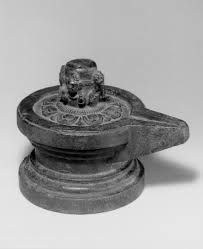
After creation of the world, the five-headed Brahma was resting and thinking about the next creation when a beautiful woman appeared before him. Even though she was born of him, Brahma became attracted to her and let his passion go. For this sin one of his heads broke off. He went to Sthanu tirtha, one of the famous pilgrimage sites on the Sarasvati River. Undoubtedly punning, the myth made Brahma construct a linga with his own four faces (thus the catur-mukha- linga) from the fifth head that had broken off. … Continue reading
CANDRASHARMAN – A sinner who had killed his teacher

Candrasharman’s story was told along with that of three other sinners in the Padma Purana. These four had committed that period’s four most terrible sins: killing a cow (go-hatya), killing one’s teacher (guru-hatya), killing a brahmin (brahma-hatya), and sleeping with the wife of one’s guru (agamyagamana). The outcaste Vidura, a Pancala desa [Pancama jana—an outcaste], had killed a brah­min and had visited all the pilgrimage sites (tirthas) to no avail. Before commit­ting the greatest of all sins, he had been a ks’atriya. Candrasharman, a brahmin, had killed his teacher (who … Continue reading

CANDRANGADA – A prince

Candrangada’s story has another myth nested within it of a curious gender trans­formation. The Puranic mythmakers did not portray a supreme god or goddess remedying the situation in this case, as they so often did. In fact, neither sages nor the divine mother (Parvati) seemed able to reverse this permanent gender change, which had resulted from cross-dressing. Prince Candrangada has married to Simantini, a brahmin (daughter of Yaj- navalkya and Maitreyi). Later when Candrangada was riding in a boat with his friends in the river Kailindi, a storm broke out, … Continue reading

CANDRA – The moon, a deva

In the Vedic period Candra, the moon, and Soma, the entheogenic plant, were connected by associations (bandhus) in the early hymns. However, Candra was not one of the adityas with Surya (the sun), but was one of the eight Vasus with Vayu (the wind). By the Puranic period Candra’s very essence had changed to that of just another Vedic deity to use as a bad example in the self-elevation or pride of medieval priests. Candra’s highest birth in the myths was as an emergence from the Churn­ing of the Milky … Continue reading

CANDIKA – A ferocious form of Parvati (or Durga

Candika was the furious aspect of the Goddess, having ten, eighteen, or twenty hands, each holding a weapon. Her vehicle was a lion, and she stood with her left foot on the corpse of the demon called Mahisha-asura and held his severed head aloft. From the bloody neck of the felled demon emerged a red-headed, red-eyed man with weapon drawn but already noosed by Candika’s rope. In the Dev! Mahatmya Candika has become the sakti of the Goddess her­self so that Durga (or Devi) possesses a feminine manifestation of her … Continue reading

CANDAKA – A hunter and an ardent devotee of Siva

While hunting in the forest one day Candaka saw a Siva temple in ruins. He reported the dilapidated condition of this temple to Simhaketu, the king of Pan- chala. After consulting the scriptures, Simhaketu allowed Candaka to install a (Siva linga, the phallic symbol of (Siva, and said Candaka could start worshipping it on one condition: that he smear himself with the ashes from the nearby cre­mation ground. Candaka and his wife Pulindi worshipped the linga for a long time. Then one day Candaka did not have any ash and … Continue reading

CANDA AND MUNDA – Two asura (demon) brothers

Canda and his young asura brother Munda allied with the great demons, SSumbha and NisSumbha. The latter two asura brothers had just returned from heaven after receiving a boon from Brahma that they could only be killed at the hands of a woman. After receiving this boon SSumbha and NisSumbha and their asura armies conquered the three worlds of heaven, earth, and Patala (the nether­world). On the advice of the sage Brihaspati the frightened devas (gods) went to Parvati, the wife of Siva. After hearing their pitiful plea, Parvati-devi went … Continue reading

CANCALAKSHMI – (2) A Vidhyadhara girl

Cancalakshmi, the celestial, was raped by the demon Ravana, while her mind was fixed in prayer. She was praying to the goddess Mahalakshmi. Cancalakshmi cursed Ravana, stating he would be killed by Lakshmi. In the course of time Lak- shmi was incarnated as Sita. Ravana abducted Sita, and Ravana was killed by Lord Rama. Thus the curse was fulfilled. Ravana’s act was avenged by Lakshmi, born as Sita, at the hands of her husband Rama.

CANCALAKSHMI – (1) A famous prostitute

Once while the prostitute Cancalakshmi (“one with moving eyes”) was waiting in the night for her lover, she was attacked and killed by a leopard (or in another version, a tiger). Following her death both the attendants of Vishnu and Yama came to take her soul. They began to argue. Yama’s servants pointed out the fact that she had sinned throughout her life. Vishnu’s emissaries argued that she had on one occasion in her life gone into a temple to Vishnu and spilled some lime juice on the wall. That … Continue reading

BUDDHA – A negative incarnation (avatara) of Vishnu

BUDDHA – A negative incarnation (avatara) of Vishnu

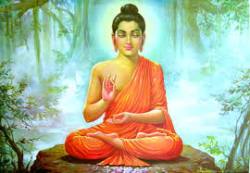
In some accounts one of the ten incarnations of Vishnu was as the Buddha. Vishnu came to earth in order to delude those who already deserved punishment for their bad deeds (karma). Deceived by the Buddha’s false teachings, these indi­viduals renounced the Vedas and ceased to do their duty (dharma). They were then punished in hell or by inferior births. In a number of later texts, this Buddha avatara was given a positive purpose. Vishnu was said to have chosen the incarnation as the Buddha in order to teach nonviolence … Continue reading